


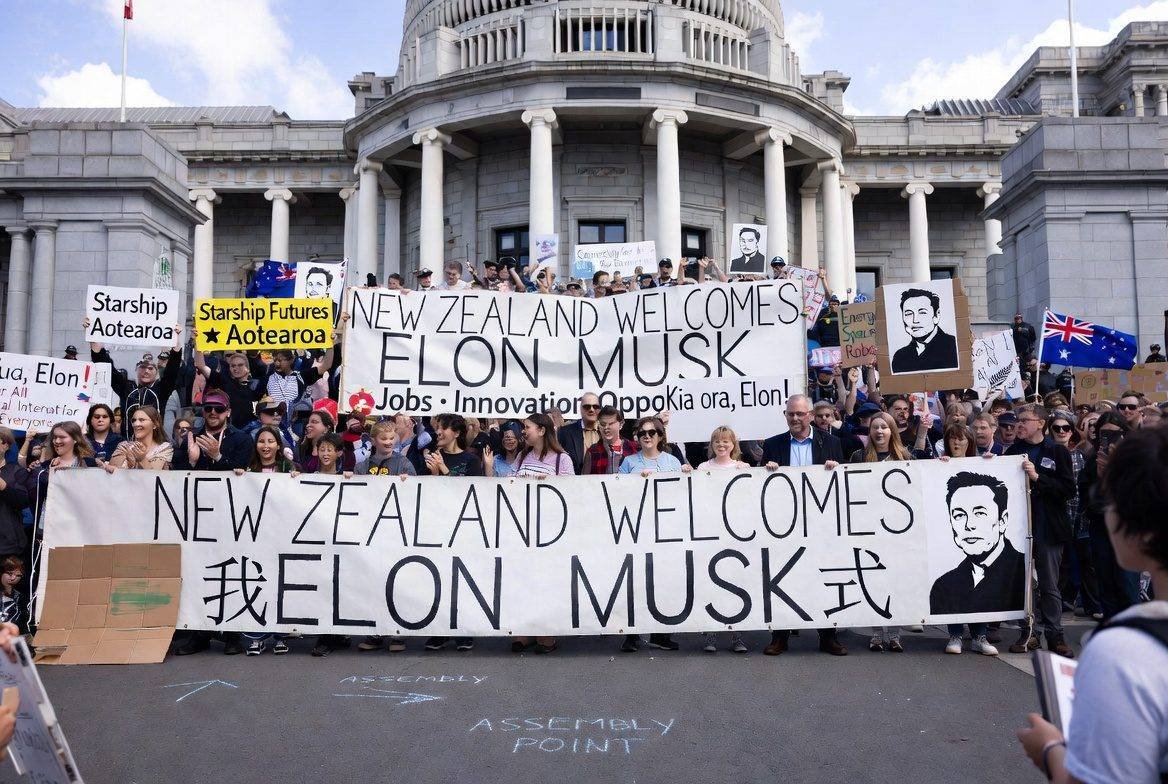
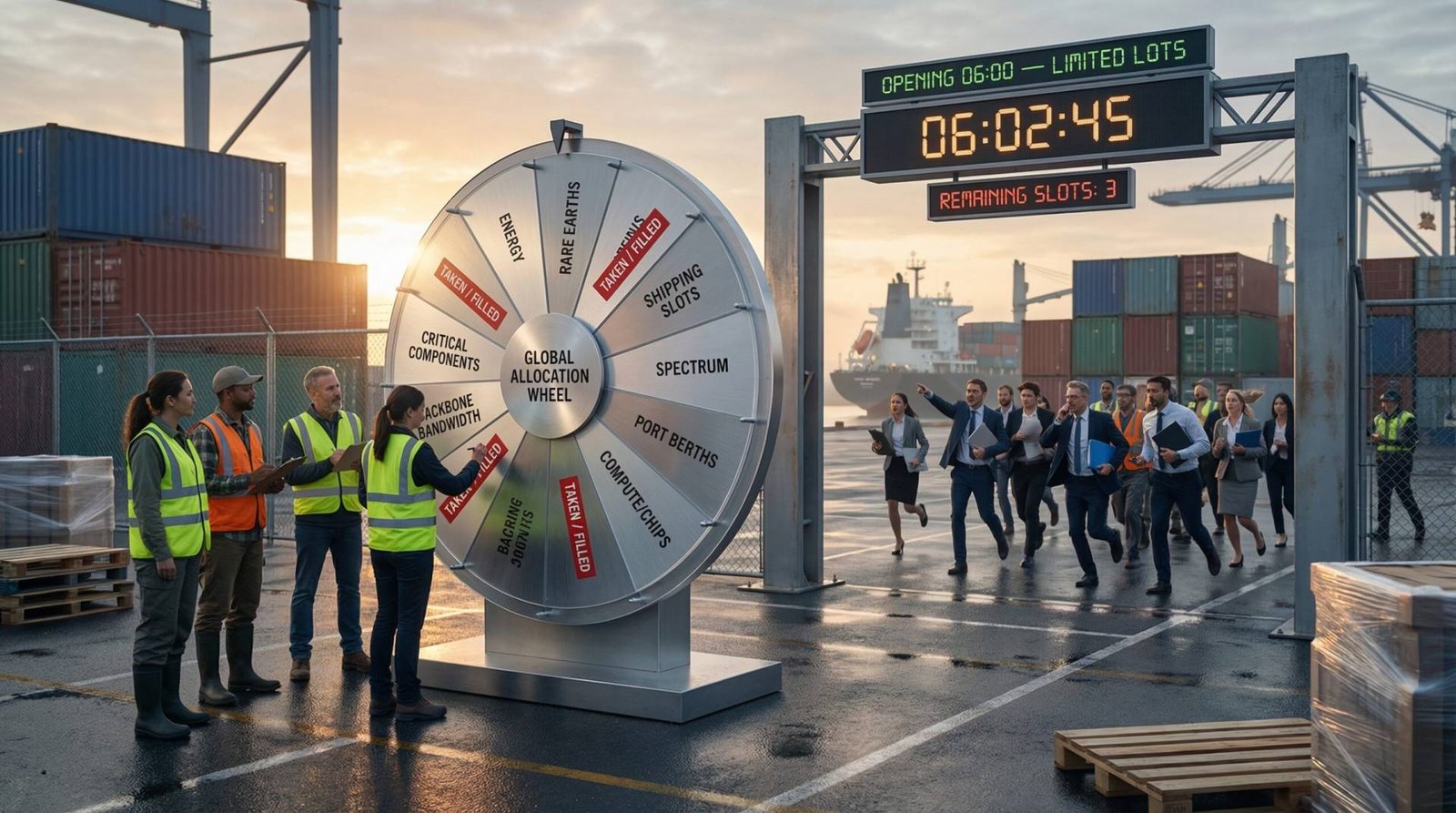






New Zealand doesn’t lack dreams — it lacks a partner who can land the future
We propose a Musk-style partnership (manufacturing × energy × connectivity × AI) to turn today’s high-cost, low-growth trap into a measurable pathway: more high-wage jobs, a broader tax base, and lower living costs for ordinary families.
Why now?
New Zealand needs a new engine that can scale productive industries, reduce system costs, and keep — or bring back — talent. This is not about idolising a person. It’s about building a verifiable industrial pathway that solves real problems. The case for why a Musk-style technology partnership could matter for New Zealand is explored separately.
- A narrow growth base: too much weight on housing and low value-add exports.
- A high-cost society: housing, energy, permitting delays and supply-chain frictions squeeze families and firms.
- Talent outflow: without high-wage growth pathways, young people leave — and don’t return.
- Budget pressure: infrastructure, healthcare and ageing costs require a stronger tax base and productivity.
What do we mean by “partnership”?
This page focuses on investment and industrial layout:
factories, grid storage, data centres, satellite ground stations, software ecosystems, and a
household benefit pathway.
(Government roles and political pathways are discussed on a separate page.)
- Not one project: a compounding portfolio of mutually reinforcing assets.
- Not a quick flip: productive infrastructure and skills built over a decade.
- Not housing speculation: the aim is to reduce total housing cost — not inflate prices.
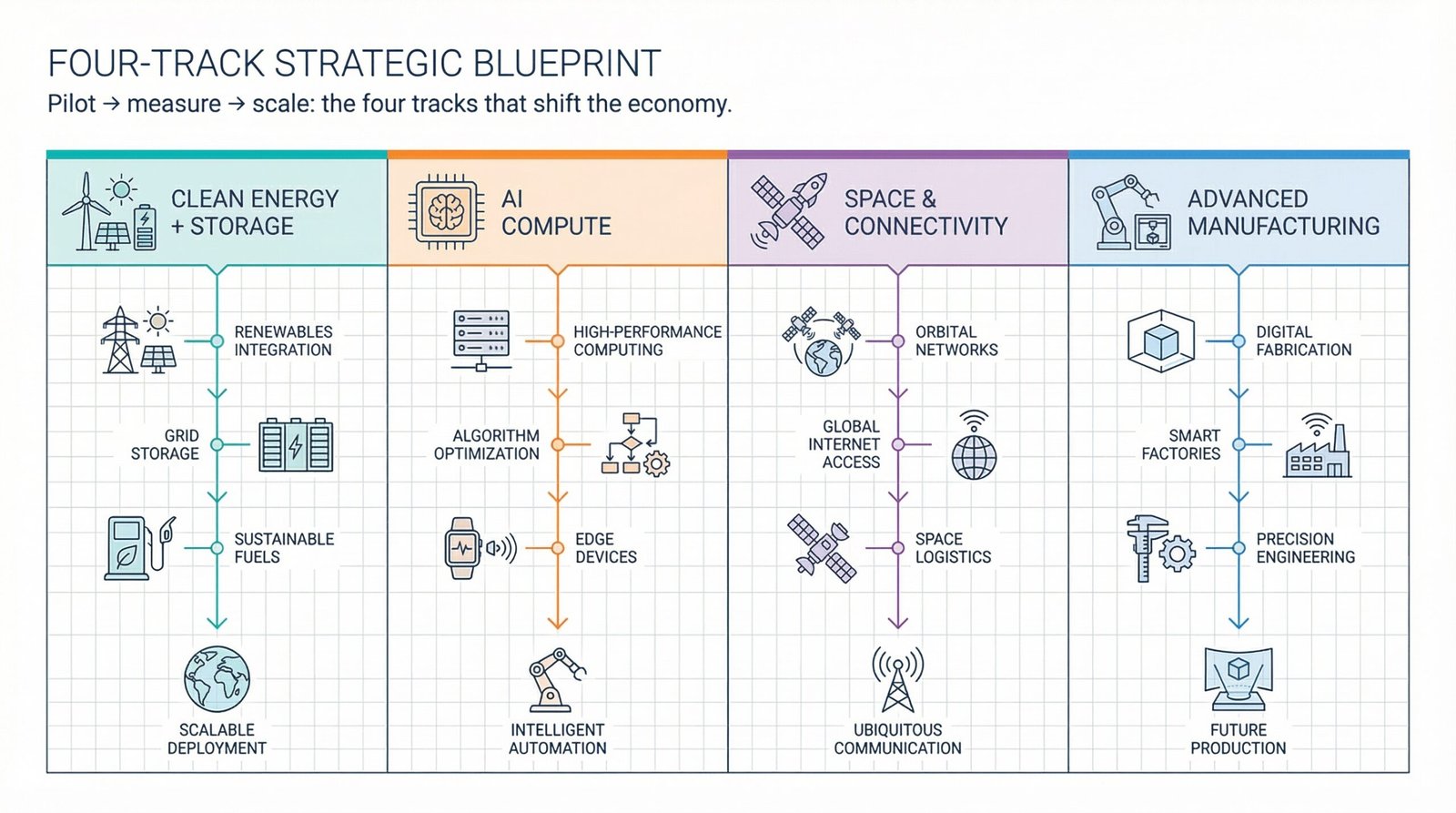
The blueprint: four tracks that make “future industry” real
We break the partnership into four executable tracks: advanced manufacturing; clean energy & grid storage; AI compute & software; and space-enabled connectivity. Each track creates jobs, broadens the tax base, and pushes down system costs over time.
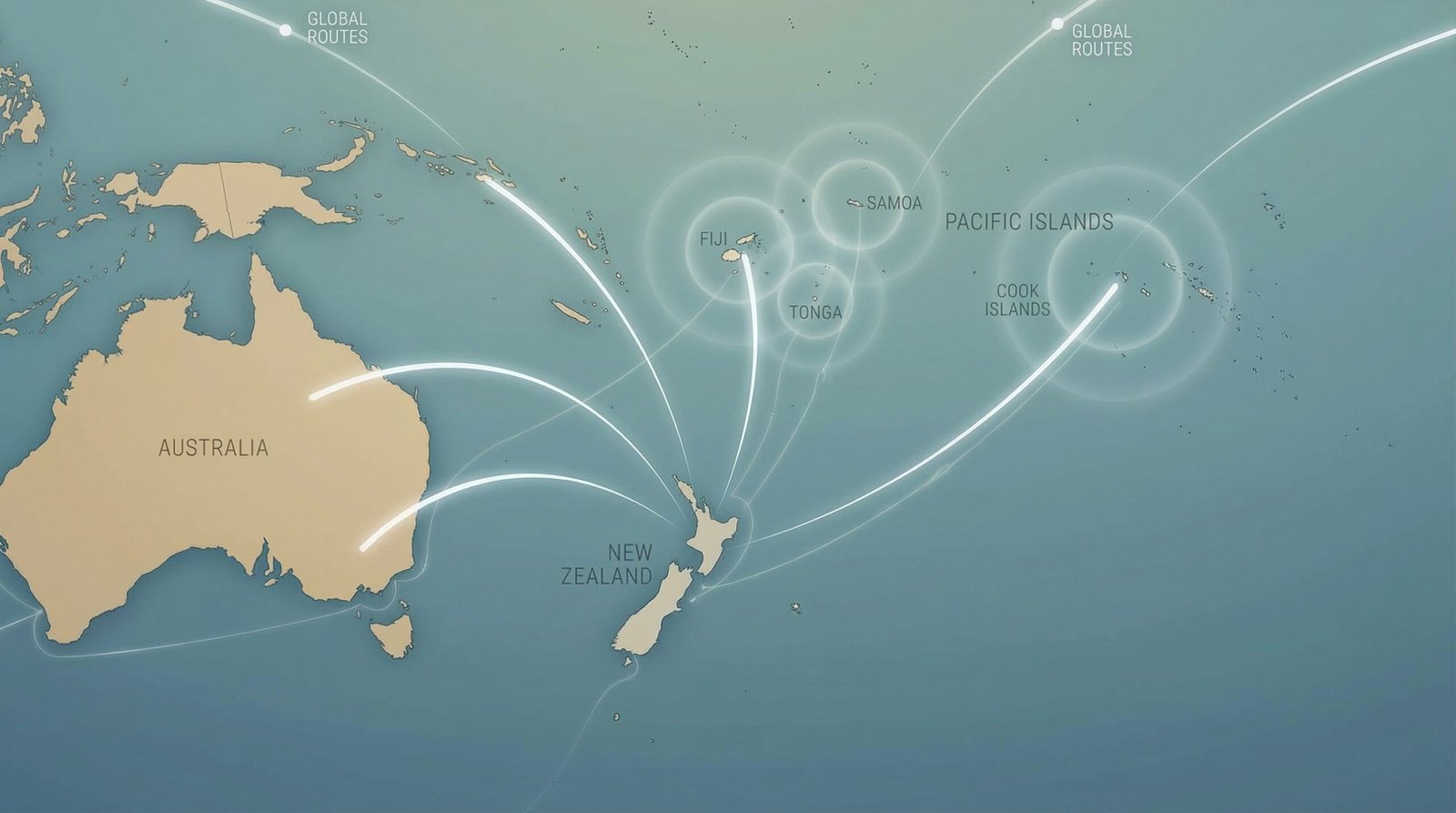
NZ’s unique position: a resilient South Pacific node
- Geopolitical distance: suitable for resilient infrastructure (energy, data, connectivity).
- Regional value: services for Australia, the Pacific Islands, polar science and maritime routes.
- Lower coordination cost: a small country can run pilot → evaluate → scale loops faster.
These advantages are part of the broader case for why New Zealand can serve as a strategic base for advanced technology and infrastructure.
What New Zealand gains (from growth to household benefit)
The standard we insist on: every industrial plan must translate into visible household benefits — stable work, lower total housing/energy costs, and a clearer pathway for young people to stay and grow.
1) Advanced manufacturing: high-wage jobs + supply-chain depth

- Creates roles across engineering, trades, QA, industrial software and operations.
- Builds a “local procurement + local training + local iteration” loop.
- Gives youth a repeatable ladder: learn → build → advance → start companies.
2) Grid storage: stabilise prices and carry new industrial load
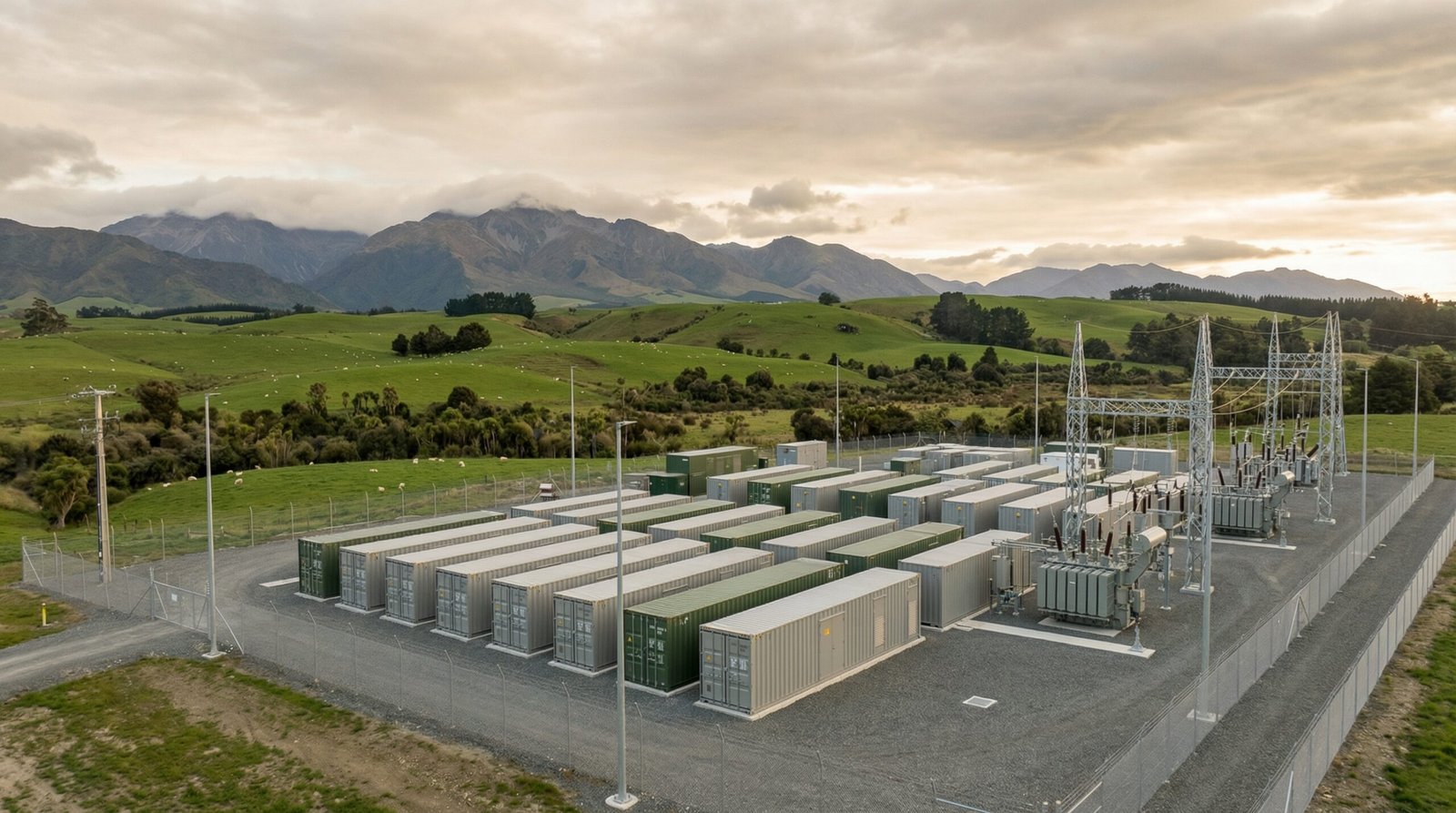
- Improves resilience: peak shaving, fast response, lower outage risk.
- Enables data centres, factories and EV charging with predictable supply.
- Supports higher renewables share while reducing system volatility.
3) AI compute: keep “digital factory” wages in NZ
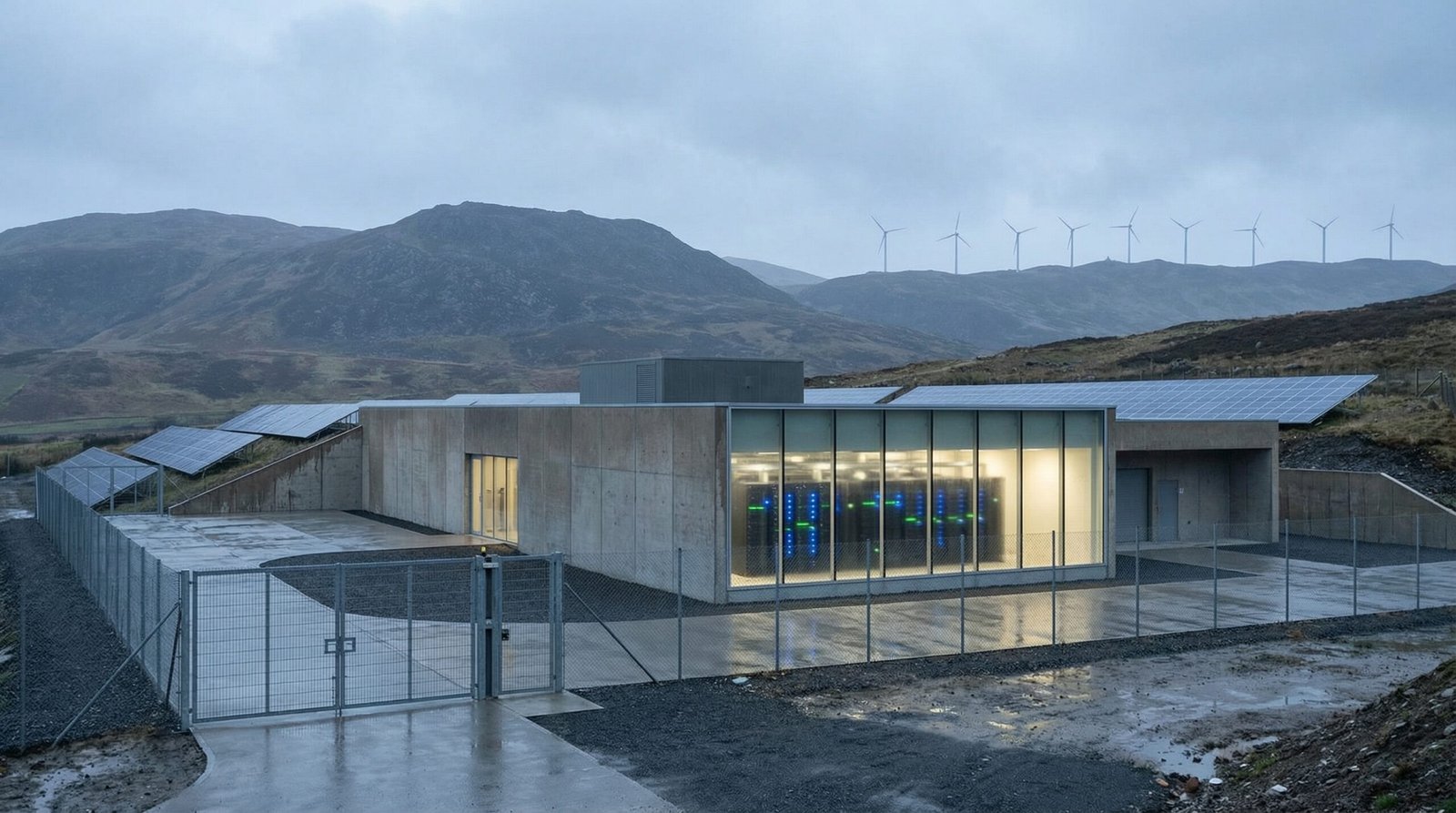
- Creates software jobs: cloud, DevOps, data engineering, security, applied AI.
- Spills into every sector: agriculture, ports, logistics, grid dispatch, aged care.
- Enables exportable software products for Australia and the wider Pacific region.
4) Satellite ground stations: resilience infrastructure

- Coverage for remote areas, maritime connectivity, and emergency fallback.
- Builds local operations, network engineering, encryption and security services.
- Strengthens nationwide communications resilience as a strategic asset.
- The Starbase New Zealand concept explores how this capability could grow into a broader Southern Hemisphere space node.
5) Housing cost relief: industrialised building + standardised home energy
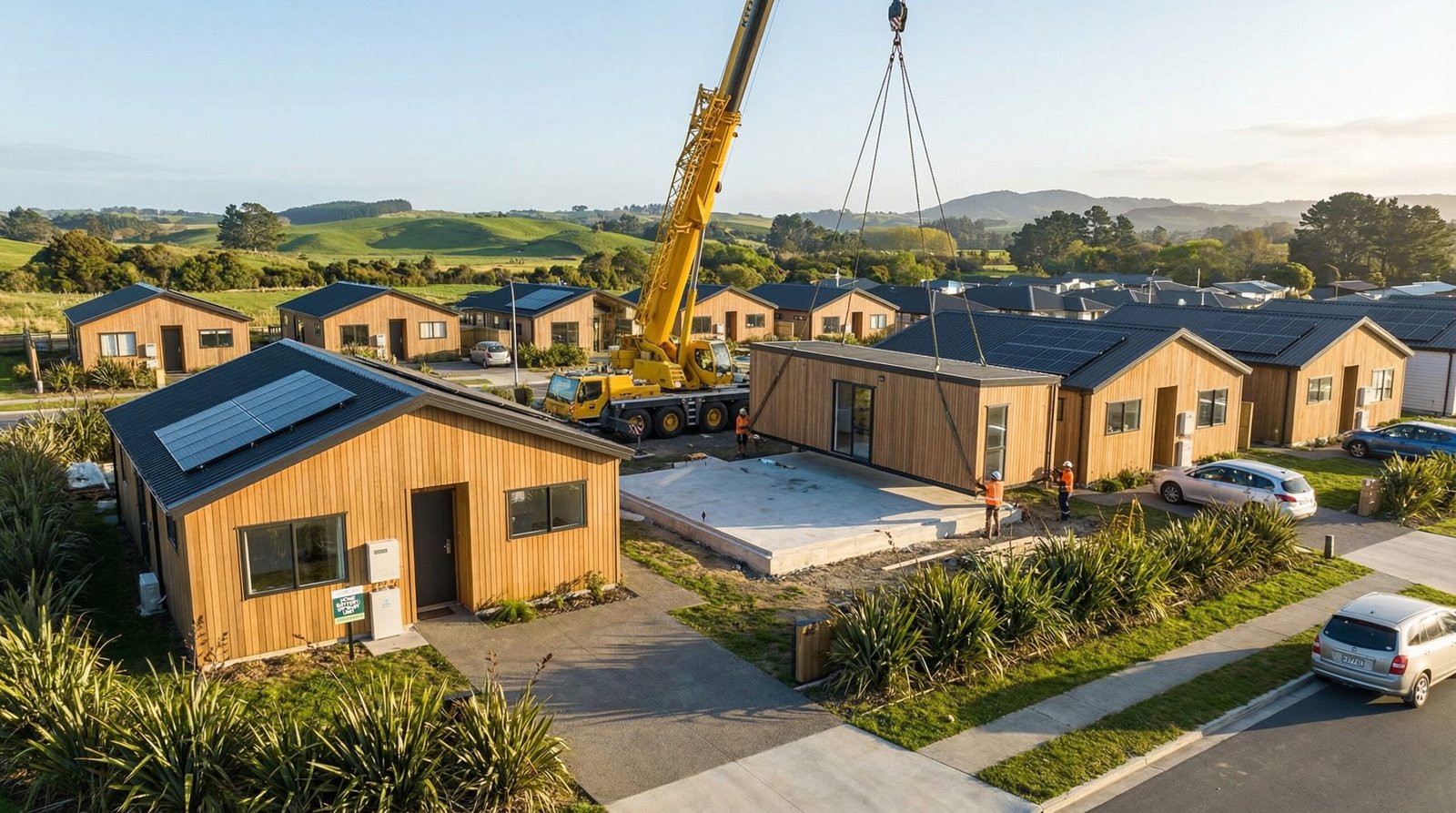
- Non-negotiable: profits must come from productivity, not housing speculation.
- Modular/industrialised builds shorten timelines and cut waste and variability.
- Home energy kits (solar + storage + smart control) lower long-term bills.
6) Household benefit pathway: make the gains measurable
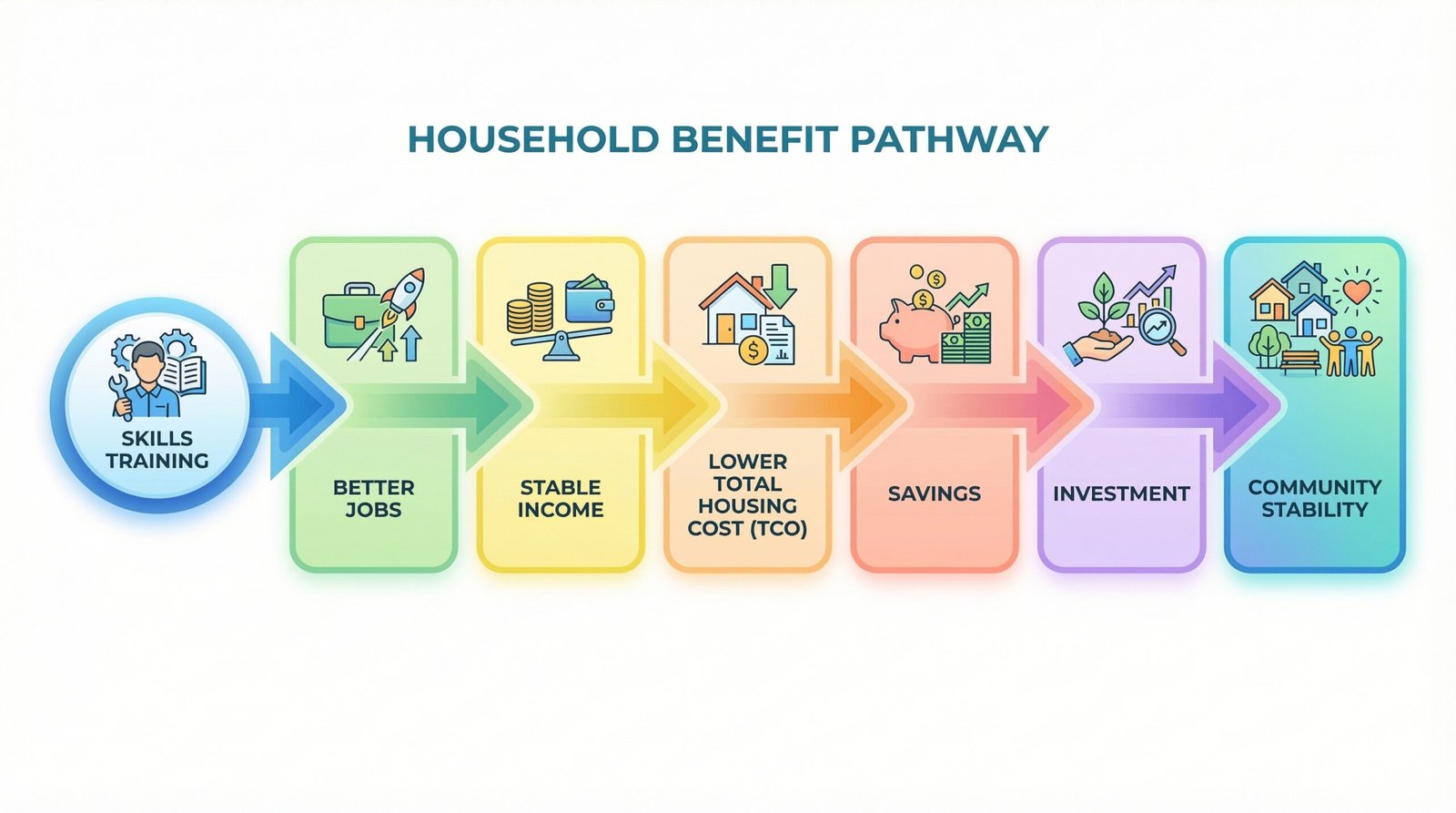
- Skills training → better jobs → stable income.
- Lower housing/energy total cost → higher disposable cashflow.
- More savings & investment → restored confidence and healthier communities.
Guardrails (must be explicit upfront)
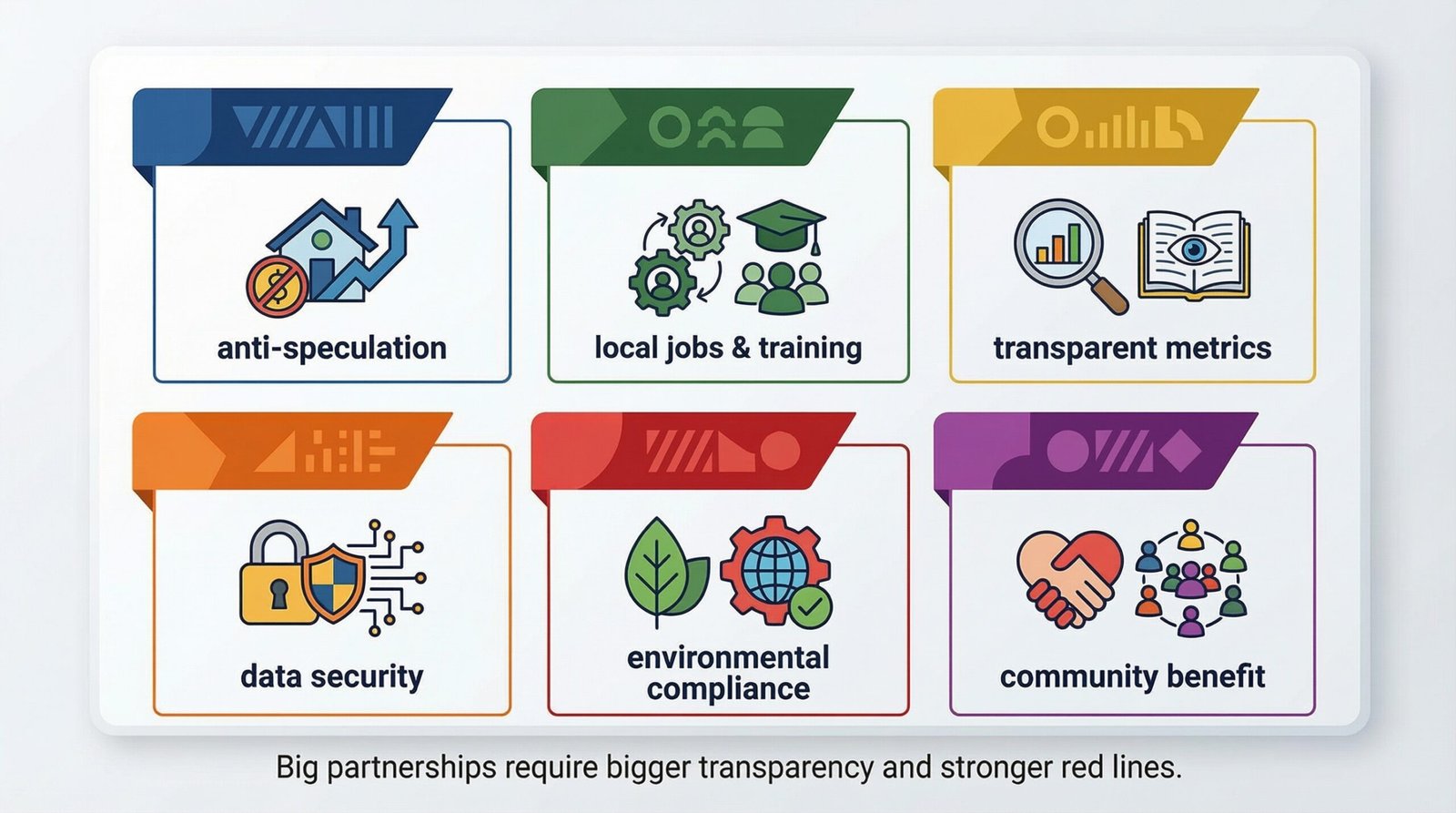
Big partnerships require stronger guardrails: transparent metrics, local benefit, data security, environmental compliance, and community engagement. This is how we avoid “housing-as-a-goldmine” logic and keep the focus on productivity and household relief.
- Anti-speculation: the plan must reduce total housing cost, not inflate prices.
- Local jobs & training: hiring and training targets written into KPIs.
- Transparent metrics: jobs, tax base, cost impacts, timelines reported quarterly.
- Data security: critical infrastructure data must meet NZ compliance and audits.
- Environment & community: siting, noise, offsets and emergency plans addressed first.
Roadmap: from social research to major investment (within 20 years)
We format the plan as “phase tasks + timeframe + actors + deliverables” — for both public communication and internal execution.
| Phase | Time | Actors | Key tasks | Measurable outcomes |
|---|---|---|---|---|
| Phase 1 | 0–12 months | Think tank / media / community | Public sentiment + market research; feasibility scan; define guardrails & KPIs; cross-party narrative | Whitepaper + polling; guardrails list; pilot city/sector shortlist |
| Phase 2 | 1–2 years | Gov / regulators / industry | Remote coverage & emergency connectivity pilots; ground-station ops planning; data compliance framework draft | Pilot coverage metrics; emergency drill loop; compliance guidance |
| Phase 3 | 2–4 years | Universities / industry alliance | Green compute nodes + software incubation; AI pilots in agriculture, aged care, and grid dispatch | Software jobs/export growth; measured cost & productivity gains |
| Phase 4 | 3–6 years | Investors / local councils | Industrial parks + grid upgrades; modular housing + home energy kit pilots | Build time reduction; cost-down evidence; household bill improvements |
| Phase 5 | 5–10 years | National delivery team | Flagship builds (manufacturing/storage/compute/ground stations) with workforce scaling | High-wage jobs at scale; broader tax base; stronger resilience metrics |
| Phase 6 | 10–20 years | Industry clusters / partners | Upgrade from testbed to South Pacific hub; export standards, services and software | Mature clusters; export growth; stronger regional influence |
Share: make an executable future visible
If you support this pathway, share this page with friends, journalists, and industry partners. More support means faster execution.