
Industry Strategy | NZSPACEX | October 2026
A Launch That Raises a Bigger Question
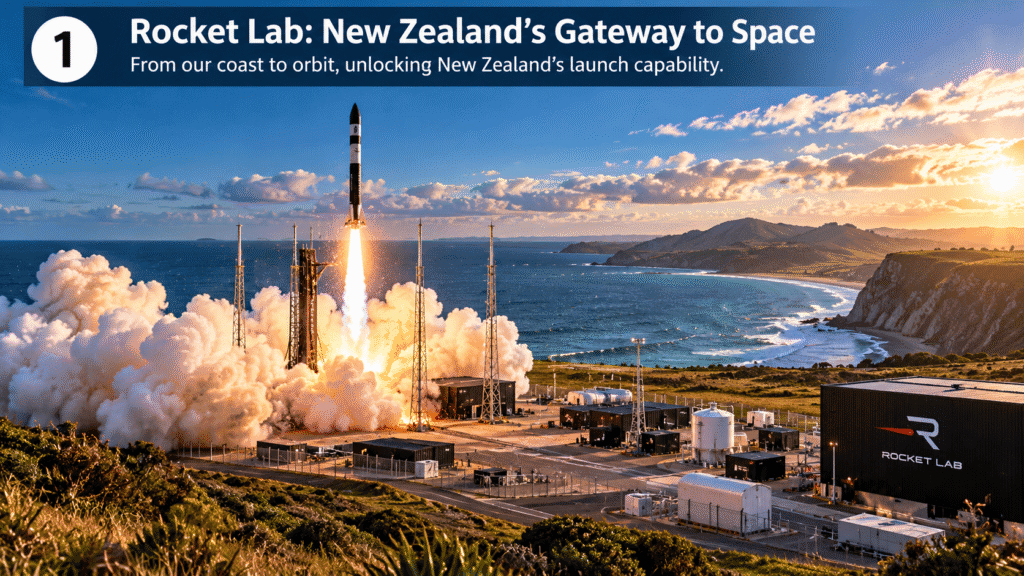
Rocket Lab’s recent Electron launch from Māhia offers more than another successful mission. It demonstrates that a country best known for agriculture and tourism can participate directly in one of the world’s most demanding technology industries. Rocket Lab’s New Zealand roots and international growth raise a strategic question: can the country build an enduring launch-services industry around that success, rather than rely on a single company? The answer depends not only on rockets but on land, infrastructure, regulation, investment and skilled people.
A Concentrated Launch Market — and an Opening for New Zealand
Orbital launch is a capital-intensive market with high technical and regulatory barriers. SpaceX has a powerful advantage in launch cadence and reusable systems; Rocket Lab offers dedicated launch services and a different proposition for smaller payloads. Their scale differs enormously, but comparing them is essential to understanding competition. Customers may value schedule control, orbital requirements, mission assurance and supplier diversity alongside price. Market concentration is not proof of a permanent monopoly, however: new vehicles, changing satellite constellations and national security requirements can reshape demand. New Zealand should examine whether it can compete as a host for launch operations, even when the vehicles themselves are built elsewhere.
Why Northland Deserves a Serious Launch-Site Study
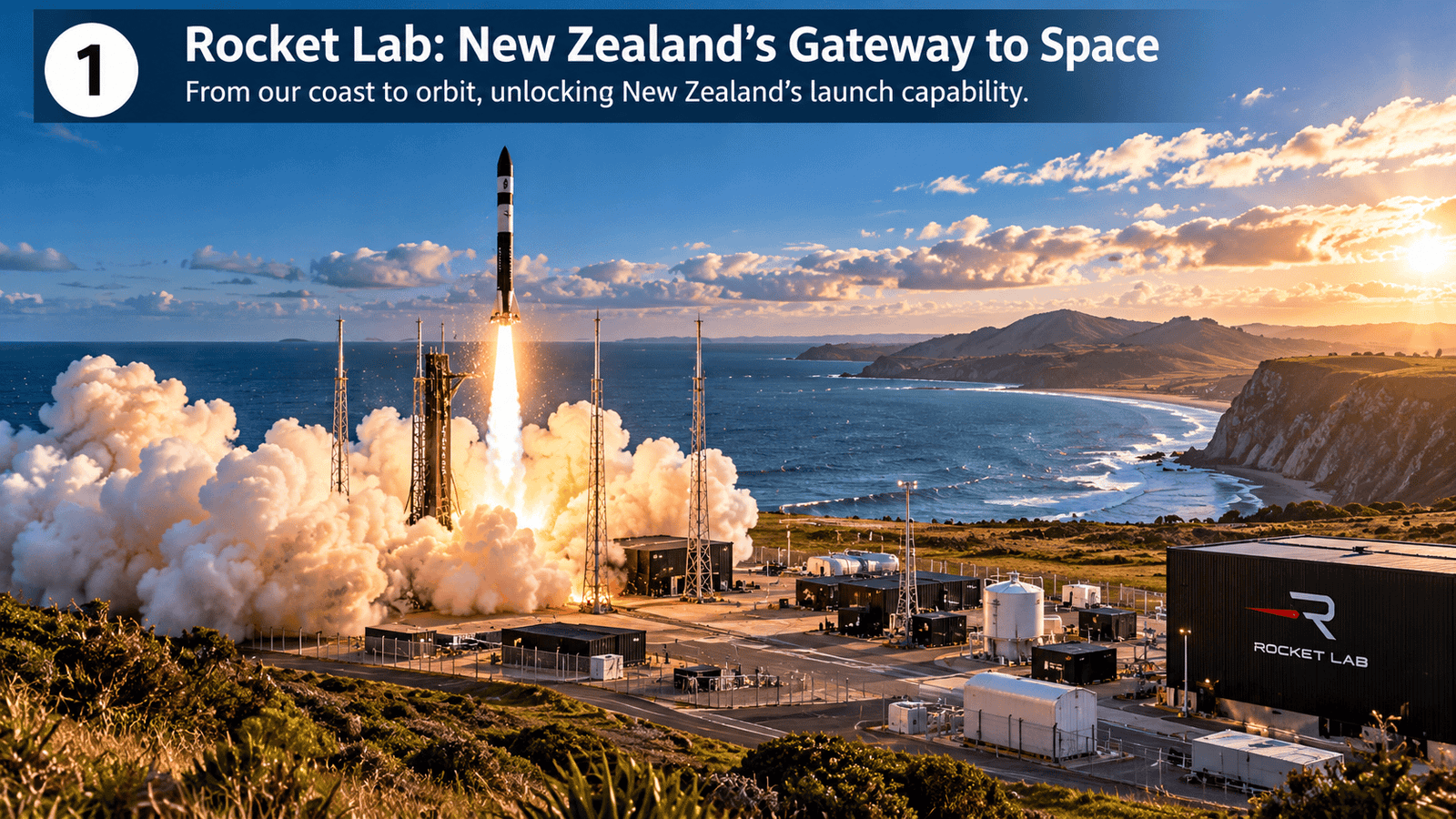
Northland’s relatively low southern latitude offers a real, though limited, rotational-speed benefit for some eastward, prograde launches compared with sites farther south. That is a reason to study it, not proof that it is the best location for every mission. Low Earth orbit describes altitude, not inclination: sun-synchronous and polar missions are also low-orbit missions and require different trajectories. A credible Northland assessment must model orbital access, downrange exclusion zones, air and maritime traffic, population exposure, weather, environmental effects and community interests. Its coastline and proximity to maritime logistics could also warrant study. But deep water alone does not make a viable port; bathymetry, wave conditions, geology, transport links and economics must be demonstrated.
Government Land, Private Investment and Open Tendering
The New Zealand government need not manufacture rockets or own every launch pad to foster a space industry. A policy option is to coordinate suitable land, invite competitive proposals and offer long-term leases on transparent terms. Investors could bid individually or as consortia, with concessions linked to construction milestones, actual investment, workforce development and operational performance. Land rights must be established rather than assumed: Rocket Lab’s privately operated Māhia launch complex does not mean the company inherited or owns its site. Any new programme must respect existing owners, Māori rights and interests, local communities, environmental law and the country’s space-licensing regime. Discounted land without enforceable public benefits is not a substitute for industrial policy.
An Open Spaceport, Not Another Single-Operator Enclave
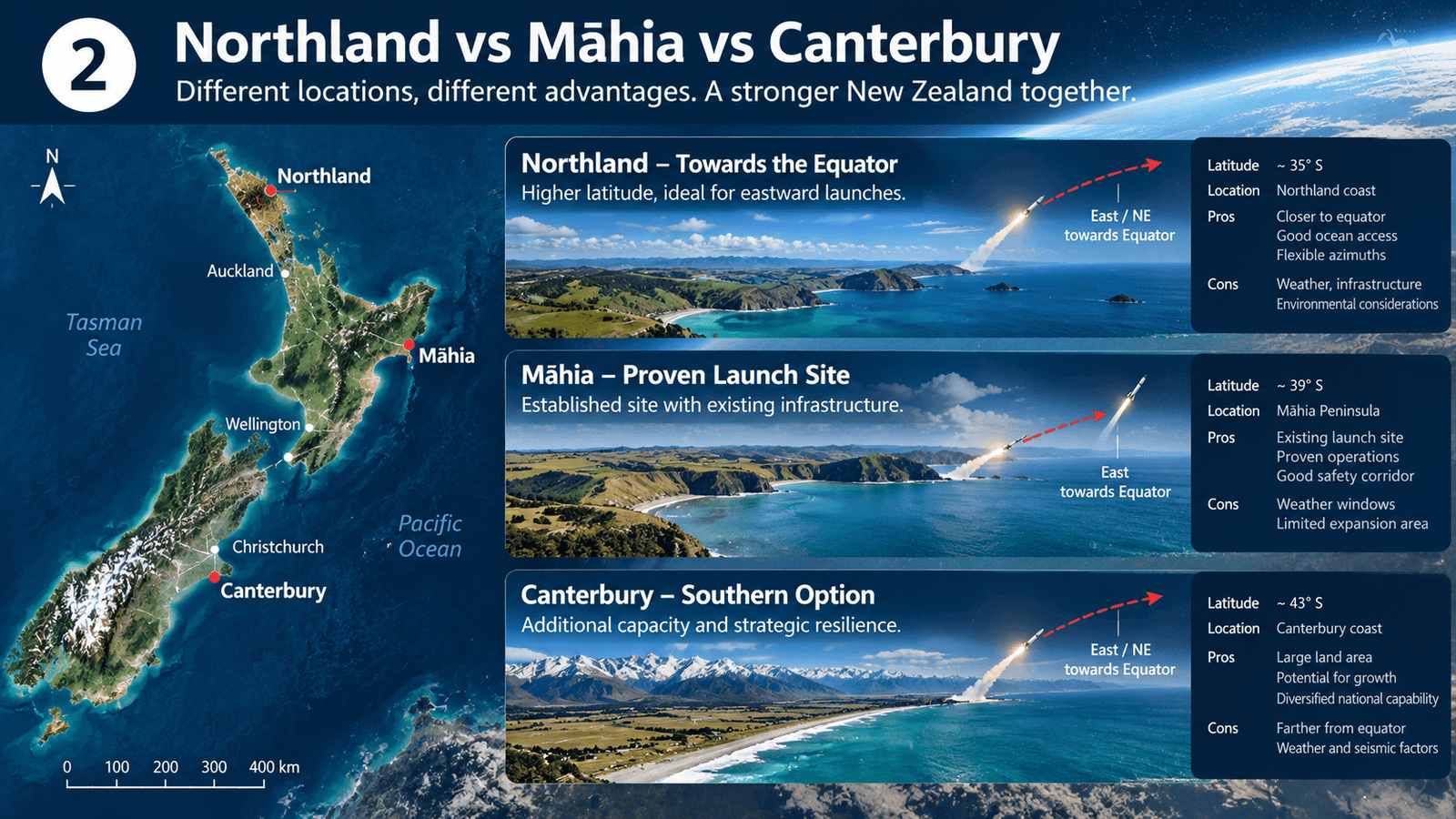
A Northland commercial spaceport could be studied as a multi-operator development. Roads, utilities, communications, selected logistics functions and support services might be shared where technically and legally practical. Launch pads, propellant systems, vehicle processing and safety zones would often remain operator-specific. International tendering could invite launch providers, infrastructure investors and local partners without assuming SpaceX—or any other company—has committed to participate. The development should be phased: establish customer demand and safe trajectories first, then finance an initial operational capability, and expand only when utilisation supports it. Port improvements or floating logistics facilities could be considered later if engineering and demand justify them.
Follow the Market, Not Just the Latitude
Low Earth orbit is central to modern satellite deployment, including communications and Earth observation. Yet different missions need very different inclinations, payload capacities and launch schedules. A lower-latitude site is not automatically optimal for sun-synchronous launches, and not every rocket is compatible with every pad. Spaceport planning should therefore begin with the addressable customer market: which trajectories are safe, which payload classes can be supported, how frequently might customers launch, and what infrastructure would be commercially viable? The principle is simple: follow the market, not just the latitude.
The Real Return: Jobs, Skills and an Industrial Ecosystem
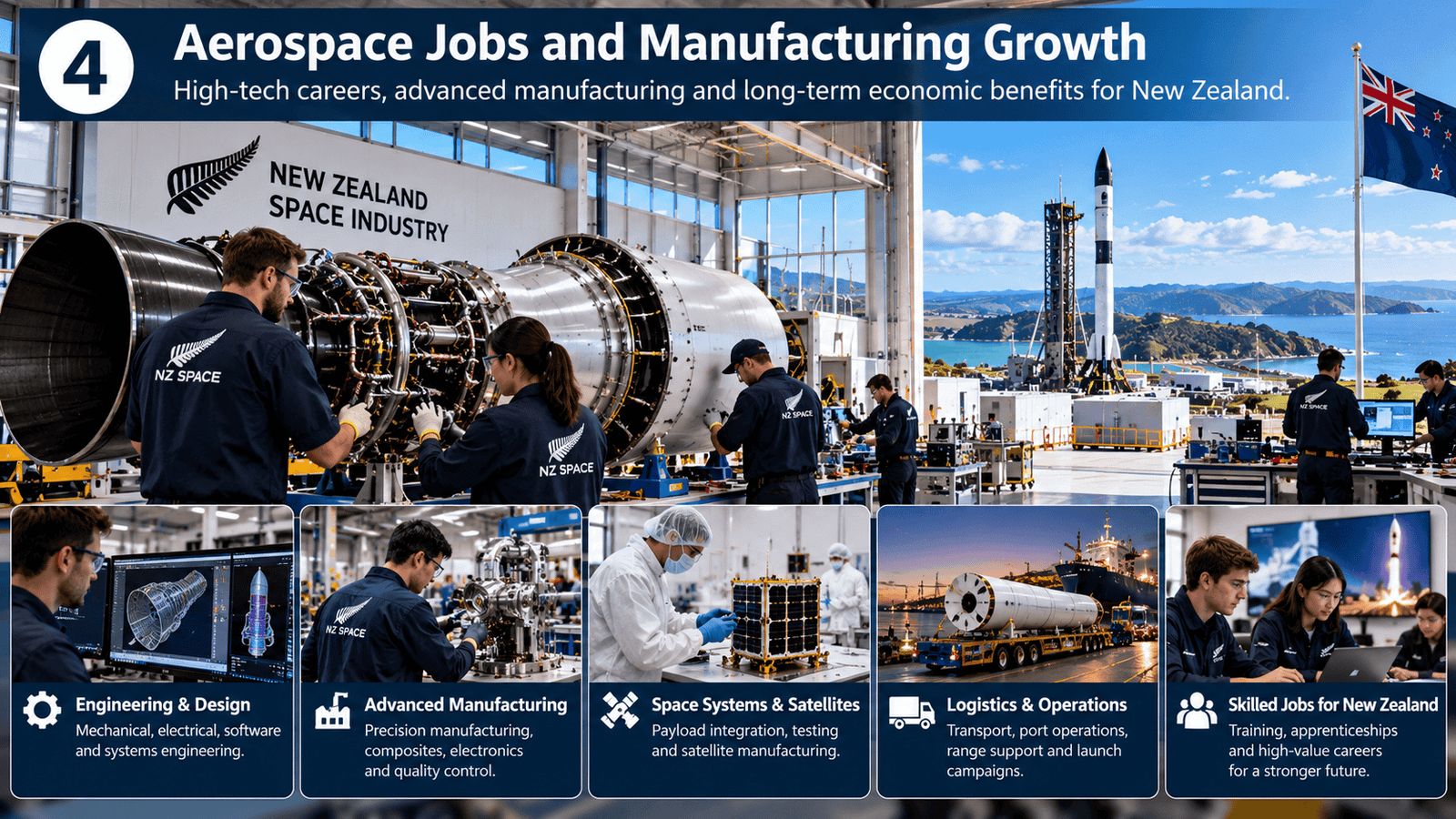
The value of a spaceport cannot be measured only by rockets launched. A successful cluster could create demand for precision engineering, electronics, software, composite materials, logistics, testing and specialised maintenance. It could also connect New Zealand firms, universities and training providers with global customers. None of those gains is automatic. Public support should be judged against verifiable local employment, procurement, training, investment and environmental outcomes, as well as the opportunity cost of land and infrastructure. A launch facility that produces little enduring local value would not fulfil the larger ambition.
Rocket Lab Should Be the Beginning, Not the End
Rocket Lab has demonstrated that New Zealand can host real orbital launch operations. The next question is whether the country can turn that precedent into a broader, competitive industry. Northland is a candidate worth investigating, not a pre-approved answer. A transparent feasibility process, open competition for investment and clear public-interest obligations would test whether a multi-operator commercial spaceport makes sense. New Zealand does not need to own the world’s biggest rocket company to compete for a meaningful place in the launch economy. Rocket Lab has opened the door to space. The challenge is whether New Zealand can build an industry beyond it.