
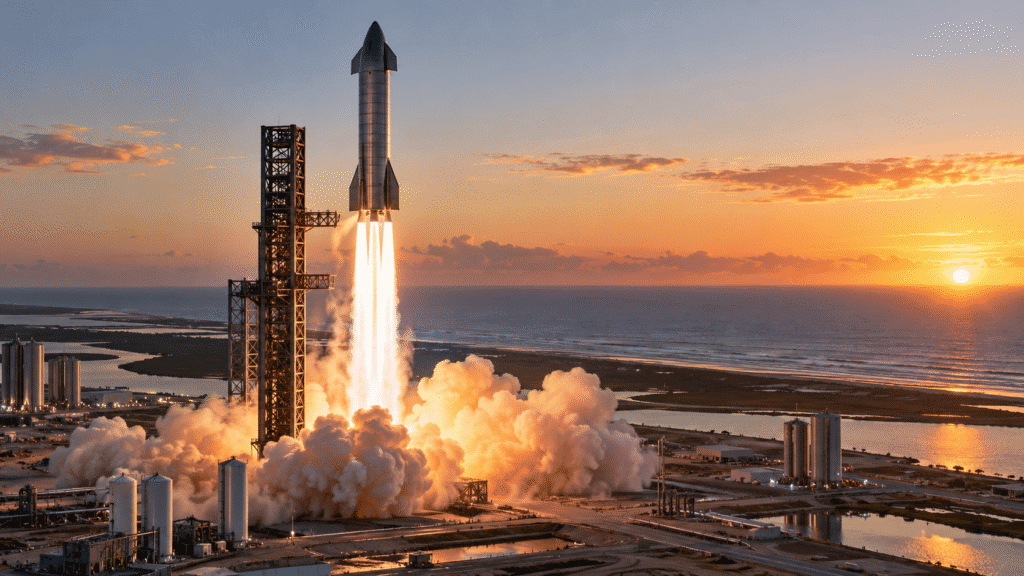
Hundreds of annual Starship launches would mean more than a busier launchpad. They would represent a larger flow of equipment and investment into space, creating assets that deliver services, earn revenue and change competition on Earth.
NZSPACEX economic commentary. Proposed launch limits, demonstrated services and longer-term scenarios are distinguished below.
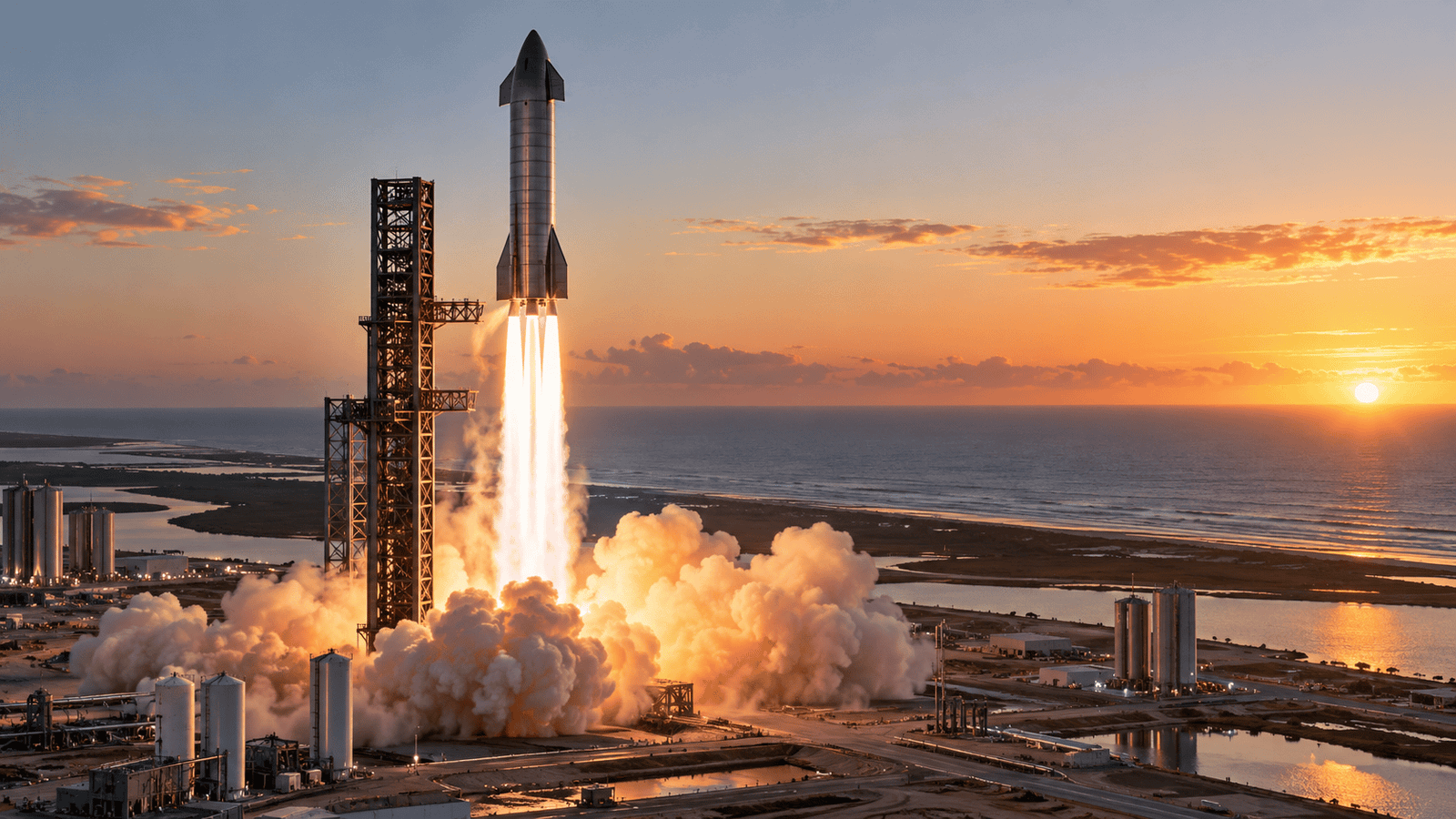
456 launches is a proposal, not this year’s achievement
The FAA’s Starbase environmental review describes a two-phase proposal. Phase 1 would include up to 100 launches and 200 landings annually. Phase 2 would include up to 456 launches and 912 landings, counting Starship and Super Heavy landings separately. The phase-two launches would be limited to weekdays.
These are proposed operating limits under review. They do not establish that approvals have been granted, that 456 launches have occurred, or that the vehicles and ground systems can yet sustain that cadence.
Even so, the scale is economically significant. A launch system designed around routine operations asks a different question from one built for occasional missions: what useful assets can be placed in space repeatedly, and at what lifecycle cost?
Launch is a process of capital formation
Capital is not literally removed from Earth when a rocket lifts off. Investment pays for research, factories, vehicles, software, ground terminals and people. Some of the resulting physical assets are then deployed in orbit, where they can produce services.
The more precise description is capital formation across a new operating environment. Manufacturing, employment, customer support and much of the revenue remain terrestrial. The equipment in space extends what that wider system can do.
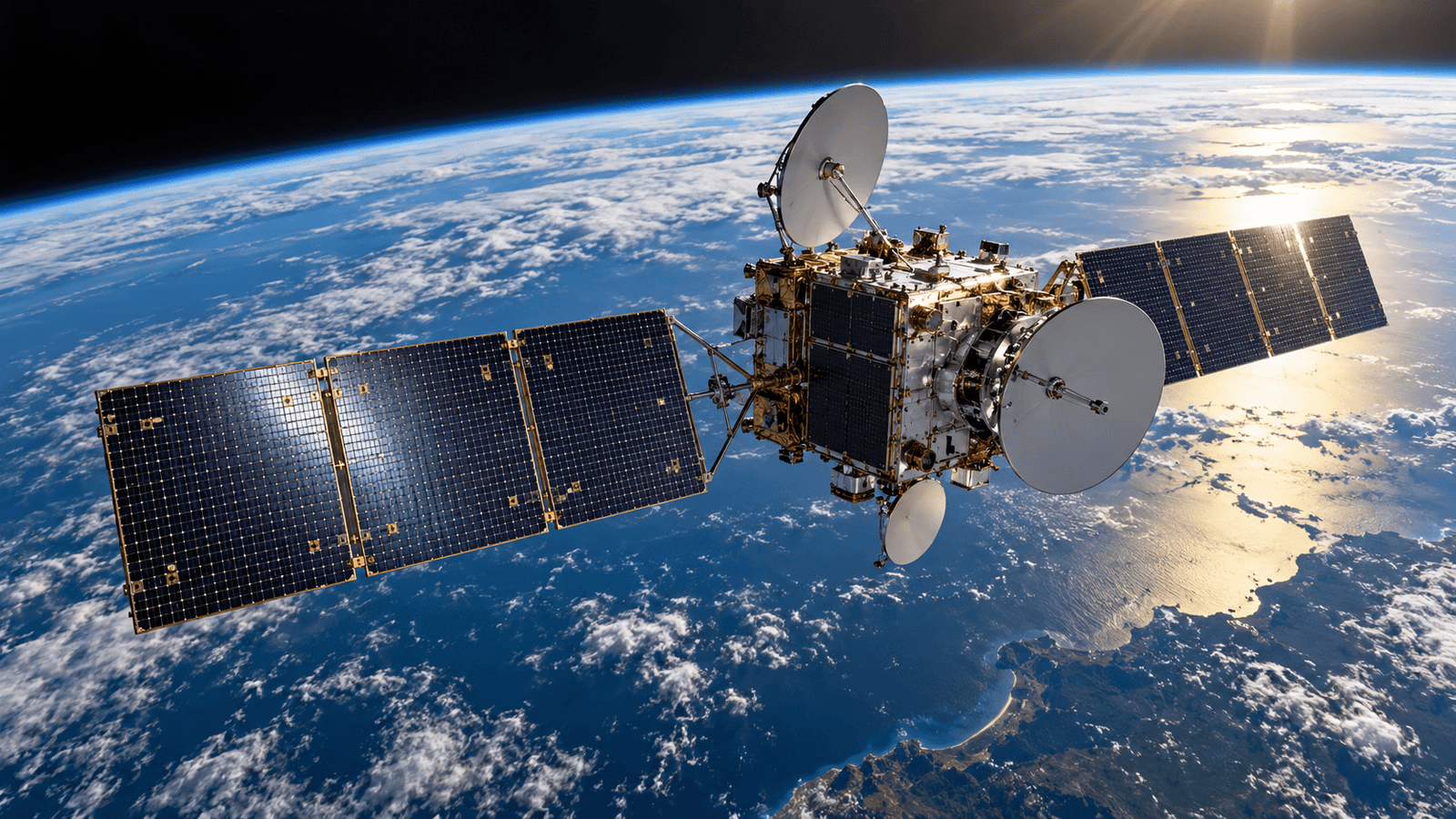
Nor is every launch immediately productive. Testing, maintenance, replacement and exploration may enable future services rather than generate immediate sales. A satellite that cannot reach customers or remain operational is an expense, not proof of a successful business.
Services complete the investment cycle
The potential cycle runs from investment to deployment, then to reliable service and paying customers, and finally to reinvestment. Communications is the clearest current example. Remote connectivity can provide a service where conventional infrastructure is unavailable or costly.
Starlink’s Direct to Cell description explains how satellite equipment integrates with mobile operators in a manner similar to a roaming partner. That demonstrates why orbital assets should be analysed alongside customers, spectrum access and terrestrial networks rather than in isolation.
Subscriber counts must also be handled carefully. Broadband accounts, mobile partner subscribers and people who have connected at least once are different measures. A headline about millions of users is not automatically evidence of millions of recurring, directly paying satellite-mobile accounts.
Incumbents can become partners, competitors or both
Existing telecommunications businesses have valuable assets: spectrum rights, customer relationships, billing, local engineering and dense urban networks. Satellite operators bring a different coverage footprint. Cooperation can create value for both.
But commercial relationships are not permanent guarantees. If the cost, coverage and capacity of a new system improve, some established services may lose business or bargaining power. Other firms may gain customers, become distributors or supply the new infrastructure.

There is nothing economically exceptional about firms advancing, adapting or retreating. Protecting an incumbent from every new competitor would also protect its customers from the benefits of innovation. Equally, a promising technology does not deserve exemption from service obligations, spectrum rules or competition scrutiny.
Our earlier article, Starlink is becoming a mobile network, examines the telecom implications. Here the wider issue is how transport capacity enables a new layer of productive assets.
More launches are useful only if the assets are useful
A launch count alone is a poor measure of economic progress. Payload mass delivered, vehicle reliability, productive asset life, replacement needs, service capacity and recurring operating cost matter too.
A higher launch rate could reflect growing demand. It could also reflect testing, replacement of short-lived assets or missions that do not deliver the expected return. More launches do not automatically mean more profit or lower customer prices.
The economic test is whether services create enough value to sustain the assets and the infrastructure behind them. Capital can expand toward opportunity, but it can also withdraw when costs, risks or weak demand overwhelm expected returns.
From low Earth orbit toward deep-space activity
Low Earth orbit is not the final conceptual boundary. Higher orbits, lunar operations and deeper-space activity may develop as transport, energy, communications and logistics mature. Each environment has different customers, travel times and financing risks.
This is a possible trajectory, not a forecast of automatic annual growth. Thousands of launches per year could be a future scenario; turning 456 into 4,560 next year is not an evidence-based projection. Demand, engineering and regulatory conditions must support each step.
The longer horizon also connects to our discussion of resources for deep-space exploration. Infrastructure can enable later markets without making those markets commercially established today.
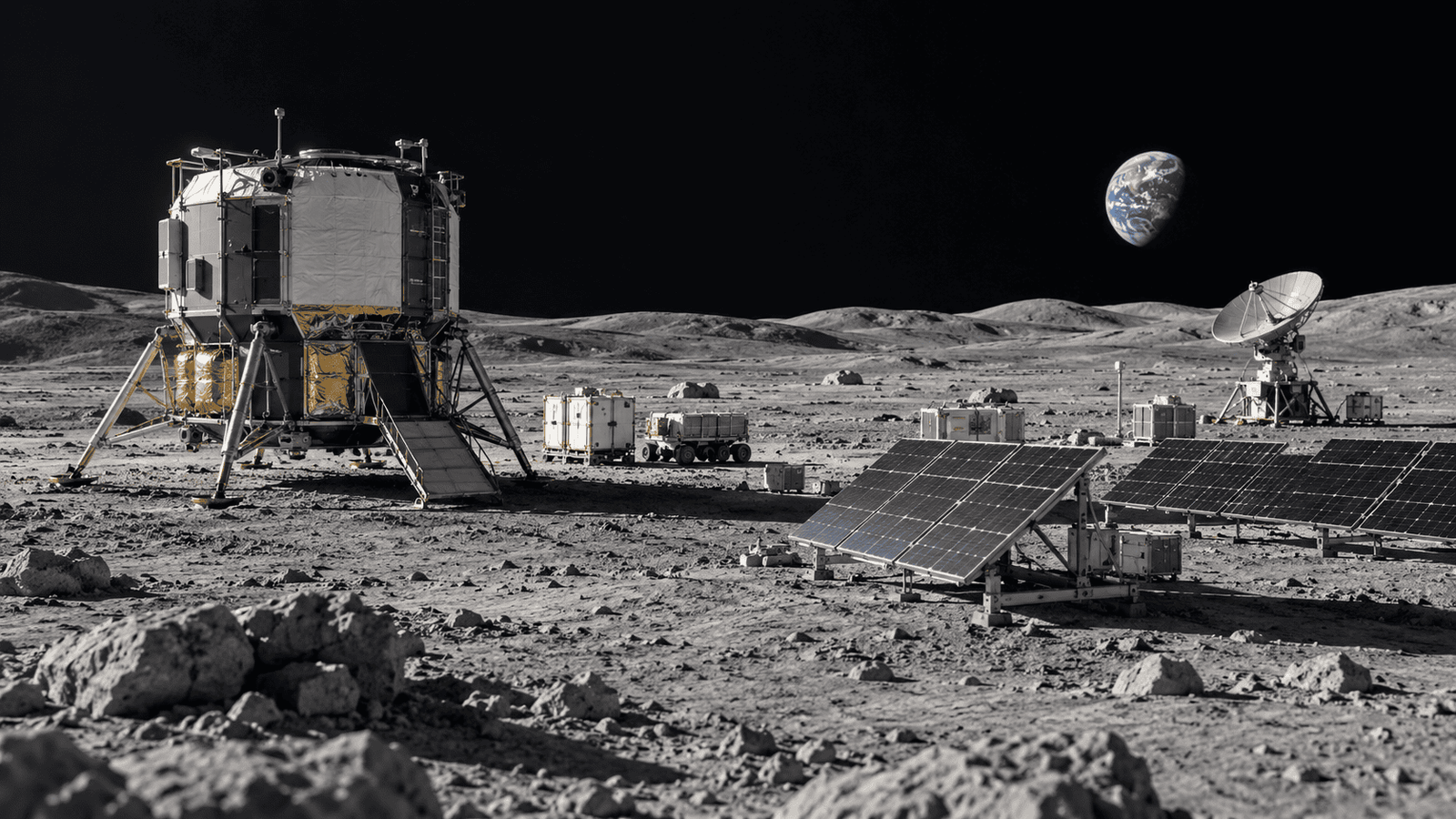
New Zealand businesses should put useful core assets into orbit
New Zealand companies should actively ask which of their core technologies, equipment or service platforms could operate in space and deliver a service customers will buy. That may mean an orbital sensor, communications payload, specialist component, software-enabled instrument or hosted payload. Buying launch access can move a productive asset into a new market without requiring the company to own the rocket.
The practical task is to identify the customer, adapt the asset for the space environment, secure launch or hosted-payload access, and build the ground operations, permissions and revenue model around it. Companies should assess these opportunities now. Waiting until every market is mature risks leaving New Zealand outside the supply chains, partnerships and customer relationships being established during this expansion.
New Zealand should ask where it can contribute
A smaller country need not reproduce an entire vertically integrated space company. It can assess opportunities in communications services, marine connectivity, precision manufacturing, ground systems, research and infrastructure support. Each proposal needs a customer and a credible operating model.
The aim should be durable participation in a growing value chain, not merely a photograph of a rocket launch. Domestic capability and useful services are better measures than enthusiasm alone.
The rocket carries more than a payload: it carries equipment through which capital may become new productive capacity. The important questions are what those assets deliver, whom they serve and whether the returns can finance the next step outward.
Sources and scope
Sources: FAA Starbase review; Starlink Direct to Cell technical and partnership description. The capital-formation framework and future scenarios are NZSPACEX analysis. This is an industry discussion, not investment advice or a forecast of launch approvals.